LRV Testing (Light Reflectance Value) to AS 1428.1
On-site LRV and luminance contrast testing of stair nosings, TGSIs, doors and handrails, measured as installed with a calibrated luminance meter. Lab testing of product samples in our Sydney lab. Reports within 24 to 48 hours.
What is LRV?
Light Reflectance Value (LRV) is how much visible light a surface reflects, on a scale from 0 (black) to 100 (white). On its own, an LRV doesn't tell you whether an element complies. What matters is the luminance contrast between two adjacent surfaces, such as a stair nosing and its tread, or a TGSI and the path around it. AS 1428.1 and AS/NZS 1428.4.1 set the minimum contrast, and the NCC references them wherever access is required.
On-site LRV testing vs lab LRV testing
| On-site test | Lab test | |
|---|---|---|
| What is measured | The installed elements, side by side, as people will see them | A product sample |
| Lighting | The site's real daylight or artificial lighting, recorded in the report | Controlled lab conditions |
| Picks up | Grout, sealers, coatings, wear, dirt and wet surfaces where relevant | The product as manufactured |
| Best for | Construction handover, audits of existing buildings, disputes | Design and product selection before installation |
The equipment we use on site
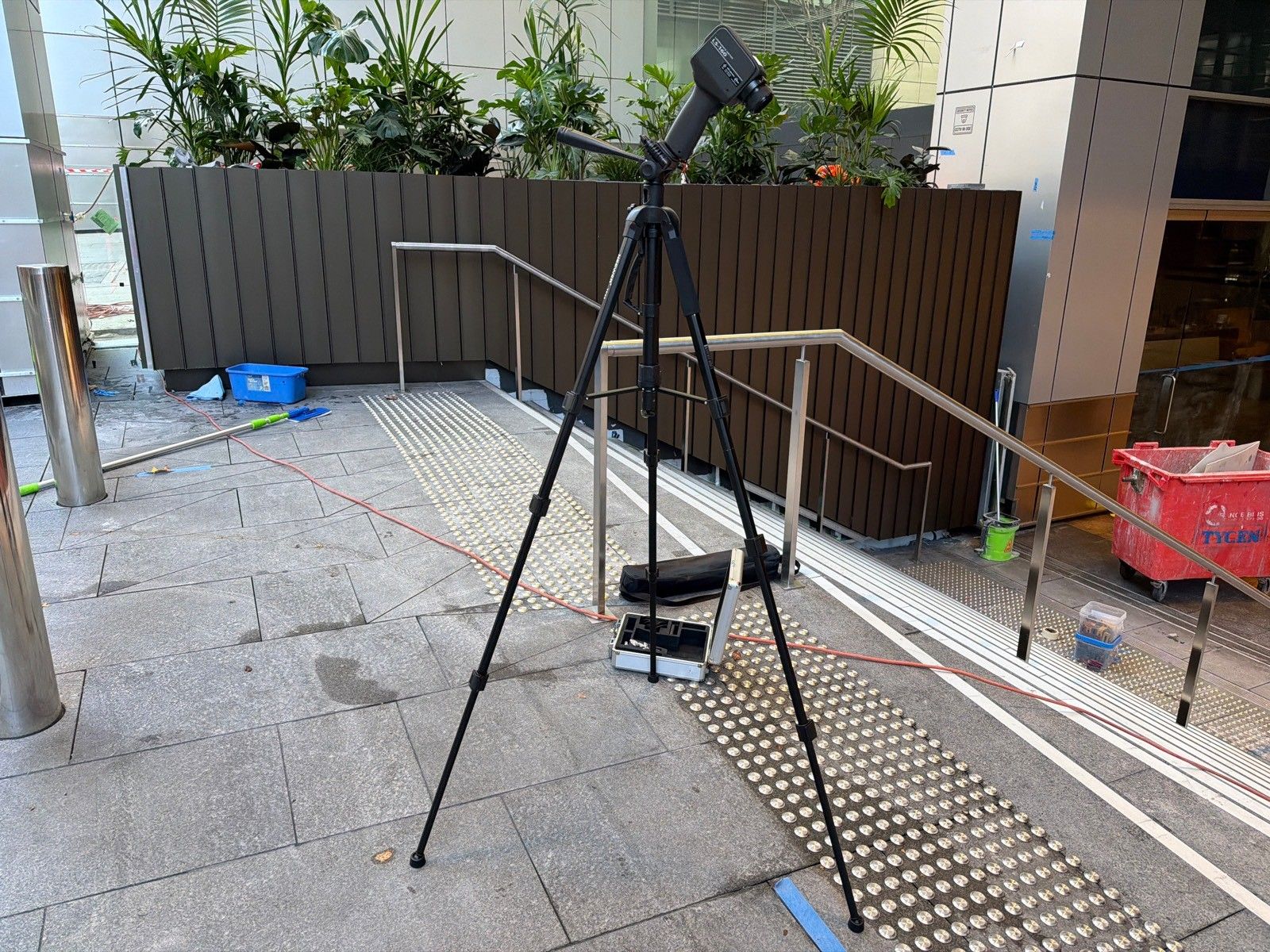
Our technicians use a calibrated Konica Minolta LS-110 or LS-160 luminance meter with a 1° field of view, mounted on a tripod at 1.6 m, following the on-site method in AS 1428.1. Every reading is taken on the installed surfaces, five measurements per surface, with photos of the set-up and the measurement field. Outdoor elements can be tested wet and dry.
What we test
- Stair nosings against treads, including strip, insert and painted nosings
- Integrated, discrete and composite discrete TGSIs against the adjacent path
- Door leaves, door frames and the surrounding wall
- Handrails, poles, bollards and columns on accessible paths
- Platform edges, ramps, footpaths, lobbies and car parks
Recent work includes railway and metro stations, an airport, hospitals, museums and new residential towers across Sydney and South East Queensland. See project examples with real results.
Free luminance contrast calculator
Enter the LRV (0 to 100) of each surface for an indicative figure. General information only, not to be relied on for compliance. Please read the disclaimer below.
Need a real result? Book an on-site test.
What's in the report
Each element pair is reported with the method, equipment, lighting conditions, every reading, the calculated contrast, the minimum that applies and a clear pass or fail. Photos of each surface and the meter set-up are included. If an element fails, we tell you which one and what to change, and we can retest after remediation.
LRV testing FAQs
LRV testing measures the Light Reflectance Value of a surface: how much visible light it reflects, on a scale from 0 (black) to 100 (white). Two LRV or luminance readings, for example a stair nosing and the tread beside it, are used to calculate the luminance contrast that AS 1428.1 and AS/NZS 1428.4.1 set minimums for.
LRV describes one surface. Luminance contrast compares two adjacent surfaces and is expressed as a percentage. Compliance is judged on the contrast, so you always need readings for both surfaces.
Both have a place. Lab testing measures a product sample and is useful at design and selection stage. On-site testing measures the elements as installed, under the site's actual lighting, including grout, sealers, wear and wet conditions where relevant. If you need to show the installed nosings, TGSIs or doors achieve the required contrast, test them on site.
A calibrated Konica Minolta LS-110 or LS-160 luminance meter with a 1 degree field of view, mounted on a tripod at 1.6 m, following the on-site method in AS 1428.1. Each report records the meter, the lighting conditions and every reading.
It depends on how many element pairs need testing, whether wet and dry testing is needed and where the site is. We quote every job individually and quotes are free. Call 0434 133 035 or request a quote online.
Yes. Product samples can be measured in our Sydney lab. Tell us the products, their finishes and what they will sit against, and we will advise what to send.
Yes. We test integrated, discrete and composite discrete TGSIs against the adjacent path surface, on platforms, stairs, ramps, footpaths and building entries.
A data sheet can help you choose products. It describes the product, not your installation, and the contrast depends on both surfaces as installed. Your certifier decides what evidence they accept, so check with them early.
The NCC doesn't require luminance contrast or LRV testing to be NATA accredited. Our reports are prepared to AS 1428.1 for builders, certifiers, councils and insurers. If your project specification asks for something specific, tell us when you book.
Reports are typically delivered within 24 to 48 hours of the site visit.