Museum Fire Stair: Handrails and Nosings on Blue Vinyl Treads
Handrails and stair nosings in the fire stairs of a Sydney museum, tested indoors under the stairwell's own lighting during a 2026 upgrade.
- Sector: Cultural and public buildings
- Location: Sydney, NSW
- Elements: Black handrail, yellow nosings, blue vinyl treads, painted walls and concrete
- Conditions: Indoors, cool white 4000K artificial lighting, dry
- Equipment: Konica Minolta LS-160 on a tripod at 1.6 m
The brief
A builder upgrading the fire stairs in an operating museum needed the handrails and stair nosings tested against the surfaces around them, so the certifier had measured evidence for each pair.
What we did
We tested six element pairs across two fire stairs, taking five readings on each surface under the stairwell's existing 4000K lighting. Testing indoors under the real lights matters: the same materials can read differently under daylight or a lab light source.
Results from two of the pairs
| Pair | Darker surface (cd/m²) | Lighter surface (cd/m²) | Contrast | Minimum | Result |
|---|---|---|---|---|---|
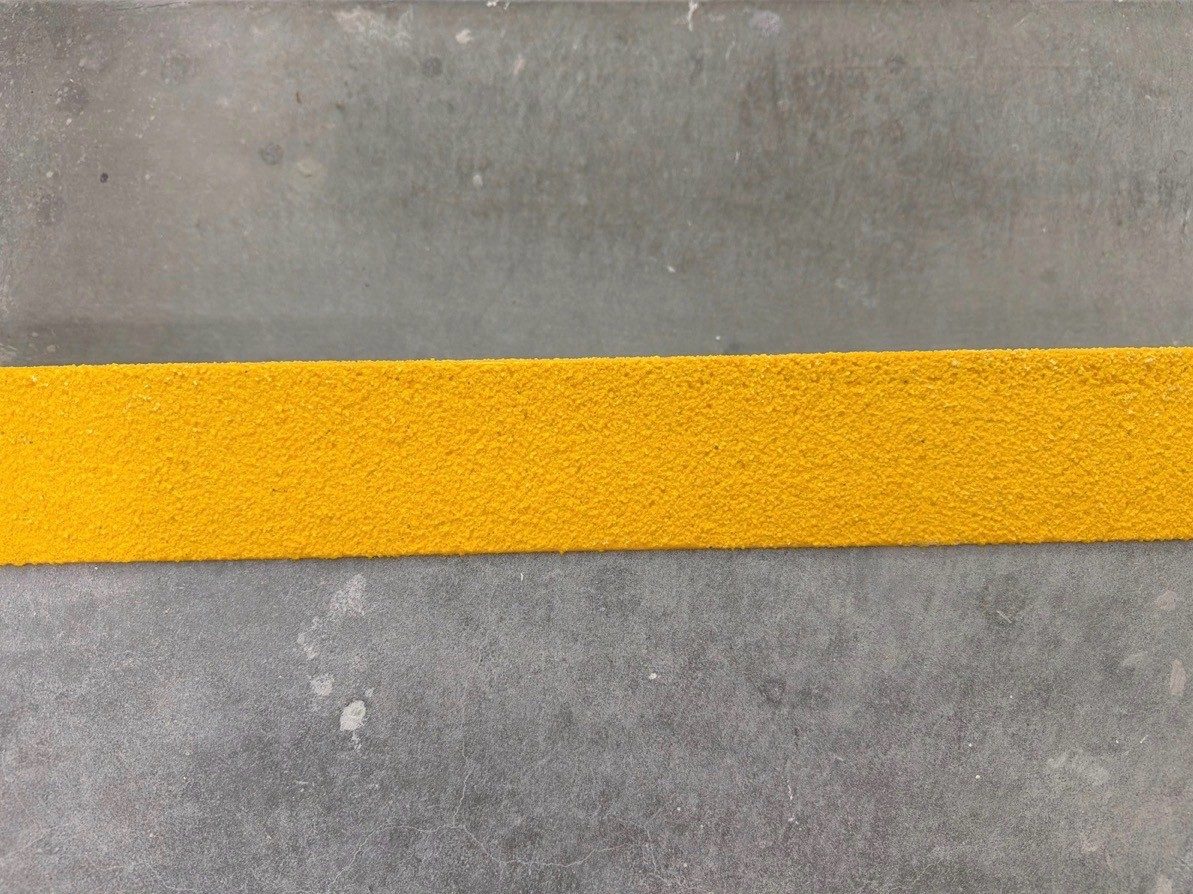
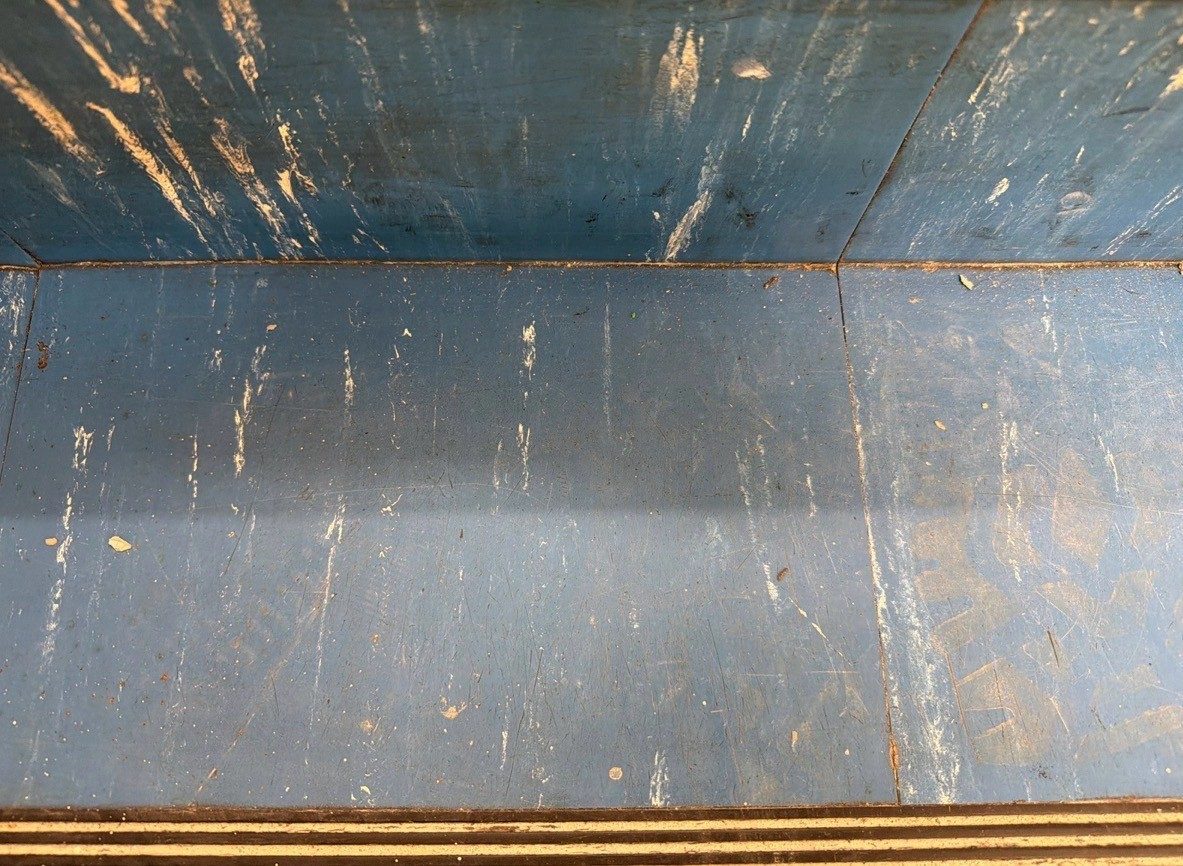
| Black handrail vs blue vinyl stair tread | 2.90 | 15.04 | 80.74% | 30% | Pass |
| Blue vinyl stair tread vs yellow nosing | 18.81 | 66.85 | 71% | 30% | Pass |
What it shows
- Dark treads need a bright nosing. The blue vinyl is dark, so a yellow nosing gave a strong 71% result where a grey or aluminium nosing may not have.
- Existing finishes can still work. The worn blue vinyl treads did not need replacing to achieve compliant contrast with the new handrail and nosings.
- One report per pair. Each handrail and nosing combination was reported separately, so the certifier could match every result to a location.
Client, builder and venue names are withheld. Results apply only to the elements tested, on the day, under the conditions recorded in each report. They are shown as general information about our work and are not a statement about any other element, product or building.
Read more about LRV testing and how on-site contrast testing works, or ask for a quote.